



A recipe from vitamin color
Vitamincolor is a culinary studio based in Berlin founded by Eleonore Buschinger. The studio aims to create culinary experiences that combine cooking, hospitality and artistic brand concepts. Fresh, seasonal vegetables play a key role in that. For the magazine she shares a springtime recipe. We spoke to Eleonore about her work and the inspiration behind it.
Your mission is to „make everyone fall in love with vegetables“. What do you do to achieve That?
I don’t try to convince people with arguments - I do it through experience.
For me, it’s about shifting perception. Vegetables are often framed as something you should eat, but rarely as something you deeply desire. So I focus on pleasure first: bold flavors, unexpected textures, and crave-worthy combinations. And then there’s presentation. I use color, composition, and form to create an immediate emotional reaction. Because if something looks beautiful and intriguing, people are already halfway there.
In the end, it’s simple: if it tastes incredible and feels exciting, people fall in love naturally.

For your clients, you try to create a holistic experience combining food, design and storytelling. How do you approach these projects?
I always start by understanding the world of the brand - not just visually, but emotionally. What do they stand for? What do they want people to feel? From there, I translate that into a culinary language. Food becomes a medium - like color, material, or sound.
I think in layers:
-
the visual identity (color, shapes, composition)
-
the sensory experience (taste, texture, temperature)
-
and the narrative (what the guest understands or feels, even subconsciously)
Everything has to align. The food shouldn’t just “fit” the setting - it should actively contribute to it.
My goal is to create something immersive, where people don’t just eat, but feel like they’re stepping into a world.
You grew up in Paris and worked in New York. How does the Berlin food scene influence your cooking?
I think for me it’s less about how Berlin influences me, and more about how I try to contribute to it.
In Paris and New York, I was mostly an eater - observing, learning, being shaped by what already existed.
In Berlin, I became a maker. I started building my own language.
What Berlin offers is a platform. There’s a real openness here towards vegetable-forward cuisine, which naturally supports what I do. It’s not something I have to justify - it’s something that’s understood and embraced. At the same time, Berlin’s food scene is constantly expanding, with influences from many different cultures. That feeds my curiosity and keeps me exploring different cuisines and edible languages.
But that curiosity isn’t specific to Berlin - it’s just part of how I work. So Berlin didn’t shape my direction as much as it gave me the space to fully step into it.
 Today, you are presenting your recipe for wild garlic and cashew cream with seasonal vegetables. How did you come up with this recipe, and what do you like most about it?
This recipe actually goes back to Covid, when I started a food delivery business. I was creating weekly boxes with around eleven different dishes that people could mix and match throughout the week.
During that time, I developed a lot of recipes with a very specific intention: they had to be full of flavor, familiar but with a twist, and versatile. They also needed to keep well and work in different contexts - as something you could eat on its own, but also reinterpret. This dish is a good example: you can serve it as a shared plate, mix it into pasta, or spread it on toast.
It really started with the ingredient itself - wild garlic. It’s one of those seasonal products that feels very alive and immediate. When it’s there, you want to use it as much as possible.
I paired it with a sage cashew cream to bring richness and softness, while keeping the dish entirely plant-based. It creates a beautiful contrast - the sharp, green intensity of the wild garlic with something smooth and round.
The vegetables change depending on what’s in season, which I love. It keeps the dish flexible and connected to the moment. What I like most about it is that it’s quite simple, but still very expressive. It shows how powerful a few good ingredients can be when you treat them with care.
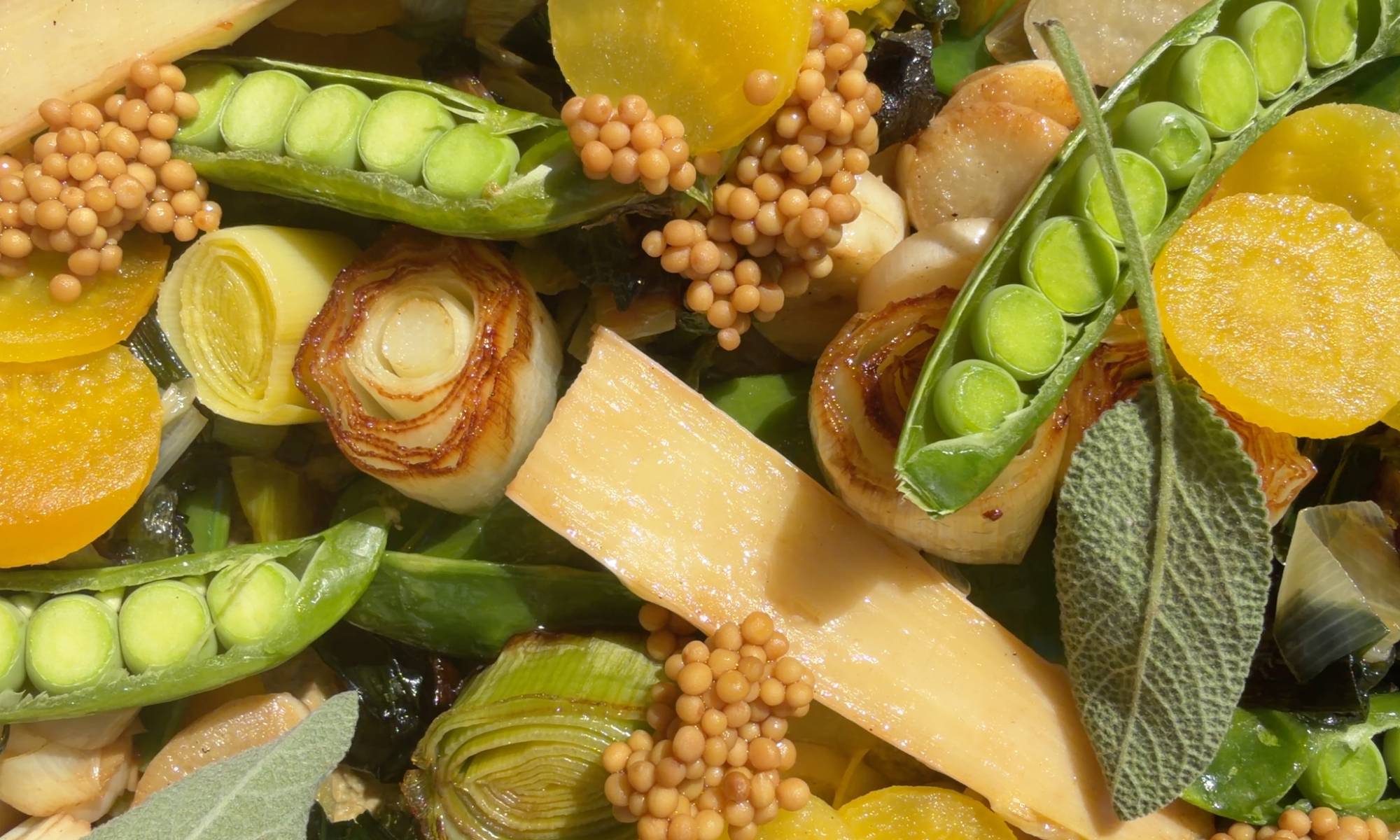
Wild Garlic & Sage Cashew Cream with Spring Vegetables
Ingredients (serves 4–6) (as part of a shared meal with other dishes)
Cashew Cream
-
200g cashews
-
1 bunch fresh sage
-
Olive oil
-
Salt
-
Water
Vegetables & Toppings
-
3 leeks
-
1 bunch wild garlic (Bärlauch)
-
2 lemons (zest)
-
8 white asparagus spears
-
1 golden beet
-
200g snap peas
-
Olive oil
-
Salt
Optional Garnish
-
Pickled mustard seeds
-
Fresh snap peas (raw or lightly blanched)
-
Crispy sage leaves
Instructions
1. Prepare the Cashew Cream
-
Preheat the oven to 180°C (350°F).
-
Spread the cashews on a tray and toast for about 8 minutes, until lightly golden.
-
Transfer to a bowl, cover with water, and soak overnight (or at least 4–6 hours).
-
Heat a generous drizzle of olive oil in a pan and gently sauté the sage leaves until fragrant. Add a pinch of salt.
-
Drain the cashews and add them to a blender with the sautéed sage.
-
Blend, gradually adding water until you reach your desired consistency (slightly thick works best here).
Season with salt to taste.
→ You can adjust the amount of sage depending on how intense you want the flavor — this works beautifully with a generous amount.
→ Die Menge an Salbei kannst du je nach gewünschter Geschmacksintensität anpassen – mit einer großzügigen Menge gelingt das besonders gut.
2. Prepare the Vegetables
Golden Beet
-
Cook the whole beet in simmering water until tender (about 30–40 minutes depending on size).
-
Let cool slightly, peel, and cut into wedges or slices.
Leeks
-
Clean all three leeks thoroughly.
-
Finely chop 2 leeks.
-
Cook them slowly in olive oil with a pinch of salt over medium-low heat until soft and slightly caramelized.
-
Finely chop the wild garlic and stir it into the warm leeks.
-
Add the zest of 2 lemons - this is the key element that brings everything to life.
-
Cut the remaining leek into rings (from the white part only) and sear in a hot pan with olive oil until golden.
Asparagus & Snap Peas
-
Trim the white asparagus and cut into bite-sized pieces.
-
Sauté in olive oil with a bit of salt until just tender.
-
Add the snap peas and cook briefly so they stay bright and crisp.
Spargel & Erbsen
- Den weißen Spargel putzen und in mundgerechte Stücke schneiden.
- In Olivenöl mit etwas Salz anbraten, bis er gerade weich ist.
- Die Erbsen hinzufügen und kurz garen, damit sie ihre leuchtende Farbe und Biss behalten.
3. Assemble
-
Spread a generous layer of cashew cream on a plate or serving dish.
-
Arrange the vegetables on top: caramelized leeks, asparagus, snap peas, golden beet, and seared leek rings.
-
Finish with optional garnishes: pickled mustard seeds, fresh snap peas, and crispy sage leaves.
Notes
This dish is very flexible:
-
Serve it as a shared plate
-
Toss it with pasta
-
Or use the cashew cream as a spread on toast
It’s all about contrast - rich and smooth, bright and green, soft and crisp - and letting a few ingredients speak clearly.
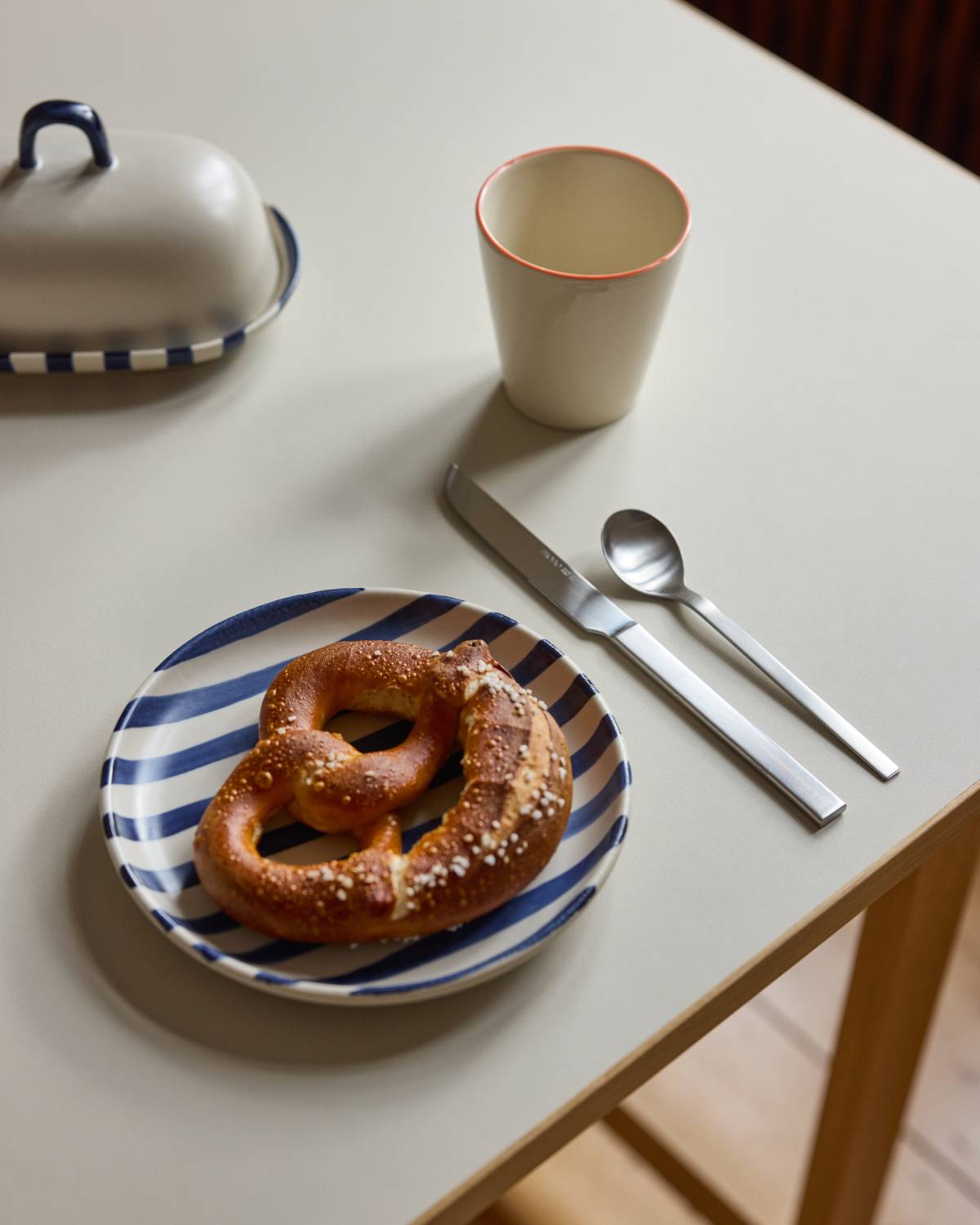
In this article you can see:
Big Plate Pura
Read more
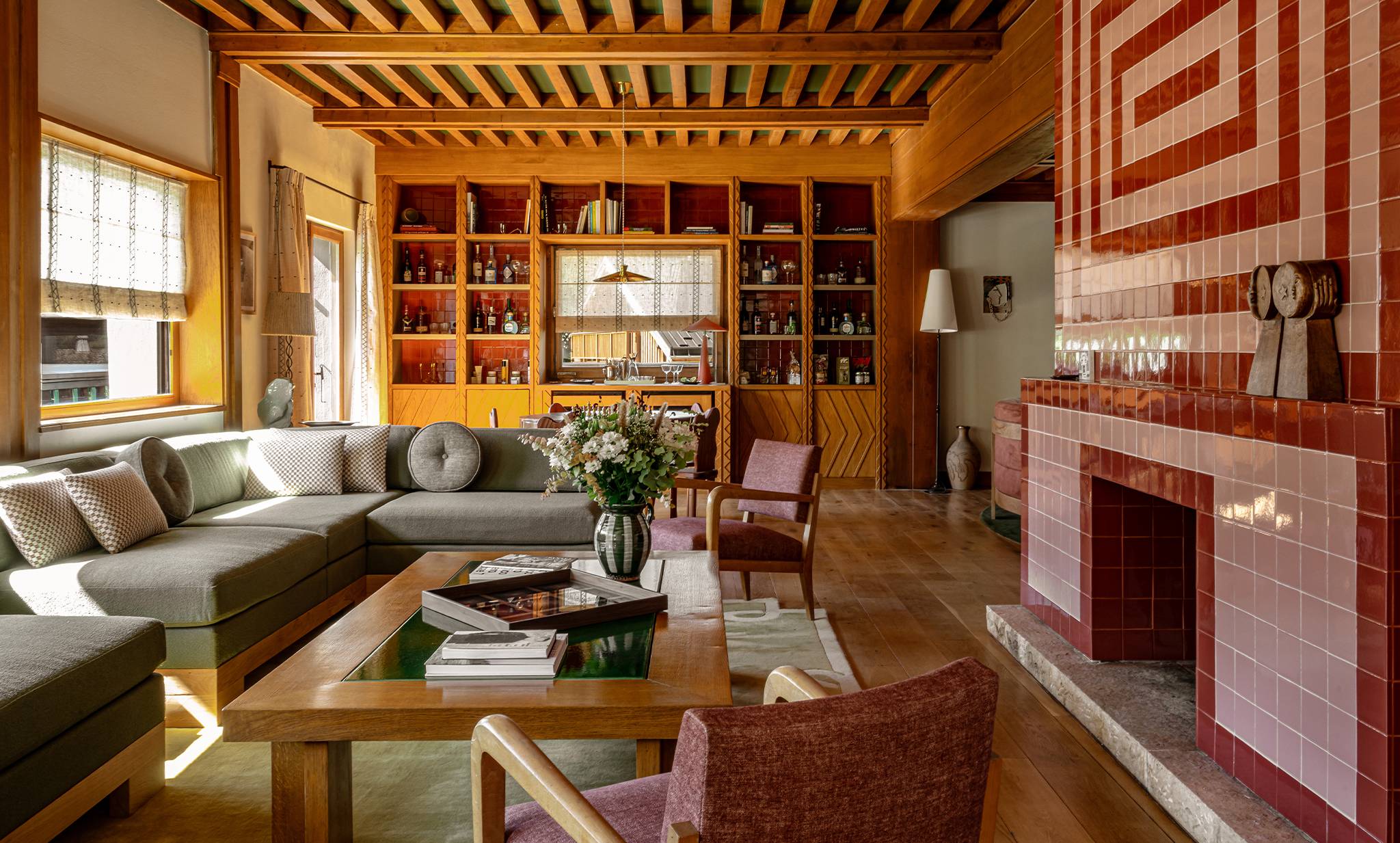
Weeks Off is a curated guide to exclusive holiday homes across Europe. We spoke with the two founders about the intention behind it.
Ein kleiner Guide für einen schön eingedeckten Tisch.