




Emissions inventories for 2023 and 2024
We want to continue recording our greenhouse gas emissions along the value chain, and we have therefore determined our carbon footprint for 2023 and 2024 as well. As in 2022, we again worked with the Cologne-based provider "Planted" to do so.
The calculation follows the division into three "scopes" set out in the Greenhouse Gas Protocol.
Scope 1 covers direct emissions from sources owned or controlled by the company.
Scope 2 refers to indirect emissions from the generation of purchased energy such as electricity, heat and cooling.
Scope 3 covers other indirect emissions that are part of the company's value chain but are not directly controlled by it – for example emissions arising from products the company purchases, from the transport of those products, or from business travel.
Our results
A total of 230.61 t CO₂e was calculated for 2023. For 2024 the figure was 235.66 t CO₂e.
In both years, the largest share was attributable to Scope 3:
- 2023: 97.70 %
- 2024: 97.75 %
Indirect emissions from our upstream and downstream value chain therefore account for the vast majority of the emissions in our inventory.
Where do our emissions arise?
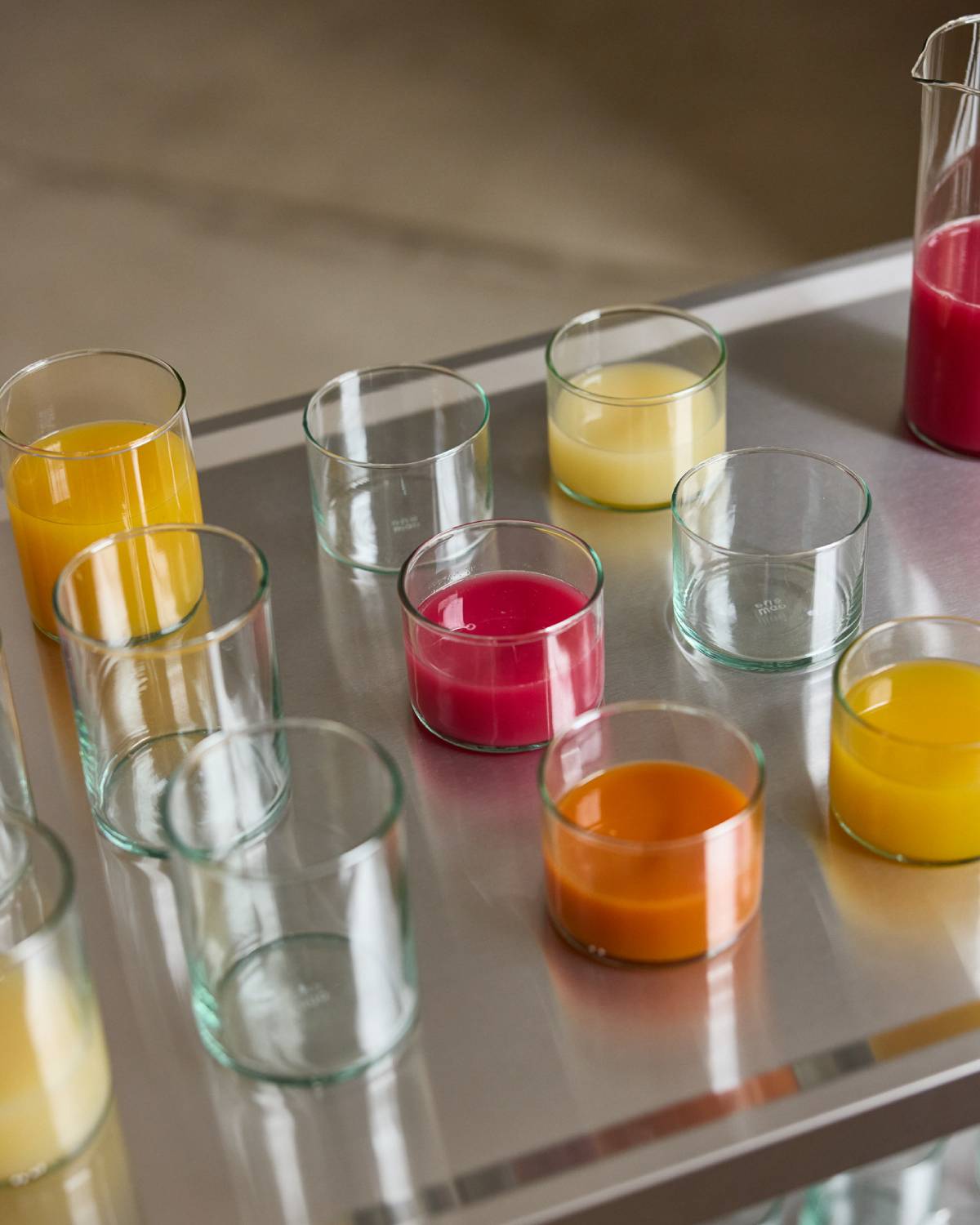
The largest single item within Scope 3 is the products we purchase, which Planted groups together under the category "furniture". It is a somewhat confusing term: what is meant are the products we buy in, i.e. ceramics, rugs and glassware. For these, Planted created dedicated emitters (emission factors) for us that already take the emissions associated with manufacturing into account – for example the energy consumed by the kilns in the workshops.
This category's share of our total emissions was:
- 2023: 26.48 %
- 2024: 20.85 %
Wood, paper and cardboard account for another substantial share. This category includes our product packaging and shipping boxes, among other things.
The share was:
- 2023: 18.47 %
- 2024: 22.56 %
Other relevant categories in 2023 included business travel, with a share of 14.42 %. In 2024, a significant share was attributable to the category "other services", at 17.52 %. This includes the delivery of our products to end customers, among other things.
Scope 1 and Scope 2
Scope 1 emissions made up 2.30 % of our total emissions in 2023 and 2.25 % in 2024. These relate in particular to heating energy for our site in Cologne and the use of our company car.
No emissions were reported for Scope 2 in either year. This is because we source green electricity for our office and our shop.
Putting the results in context
At 230.61 t CO₂e and 235.66 t CO₂e respectively, the total emissions calculated for 2023 and 2024 are at a similar level.
The figures for the two years differ above all within Scope 3. One reason for this is changes in our product portfolio. In 2023, our range included rugs and wool blankets, among other things. In 2024, our focus shifted back more towards tableware and products for the dining table, while glassware was added.
A direct comparison of total emissions with the 2021 and 2022 inventories is only possible to a limited extent, as the areas covered and, in some cases, the calculation methods differed. The volume of products purchased has changed, and changes in our company structure also affect individual key figures.
In a subsequent review of our emissions calculation for 2022, we also found that the quantity of glassware purchased had been overstated. This affected the emissions figure reported for 2022 and makes the figures for 2023 and 2024 appear lower.
The emissions inventory shows us in which areas of our business activities and value chain particularly high emissions are recorded. On this basis, we examine where changes are possible and worthwhile.
Supporting climate protection projects
For 2023 and 2024, we again provided financial support to climate protection projects.
Supporting these projects and calculating our own emissions are two separate things: financing a climate protection project does not change the amount of emissions reported in our inventory.
For this support we selected the Cururos Wind Farm Project in Chile. It is certified to the Gold Standard. The project comprises two onshore wind farms, "El Pacifico" and "La Cebada". According to the project developer, together they generate around 290 GWh of electricity per year. The wind farm replaces fossil energy with clean, renewable energy, reducing greenhouse gases by up to 173,000 t CO₂e per year.
It also contributes to the sustainable development of the region by reducing dependence on fossil energy sources and creating new, sustainable jobs and sources of income. It thus supports the United Nations Sustainable Development Goals 7 "Affordable and Clean Energy", 8 "Decent Work and Economic Growth" and 13 "Climate Action".